If you've ever followed the same plan as a male partner — same meals, same workouts, same deficit — and watched him drop weight while your scale barely moved, you already know the secret of female metabolism: it doesn't play by the rules written for men.
The numbers are stark. In many populations, women are up to 1.5 times more likely to experience obesity or severe obesity than men. Around 40% of women worldwide are now classified as overweight. This is not a story about discipline. It's a story about biology.
The main reason is hormonal. Women's bodies are regulated by cyclical changes in estrogen and progesterone, which directly impact appetite, cravings, insulin sensitivity, fat storage, water retention and energy levels. At certain phases of the cycle — and during hormonal shifts like PMS, perimenopause or menopause — the body naturally becomes more prone to storing fat and retaining water. On top of that, women tend to be more sensitive to stress hormones like cortisol, which further promotes fat storage around the midsection. Because weight loss isn't linear in this system, approaches that don't account for these fluctuations often feel ineffective or unsustainable — even when the effort is real.
Start with hormones. Testosterone, the dominant sex hormone in men, is steady day to day. Estrogen and progesterone shift every single week. Those shifts change appetite, water retention, insulin sensitivity, sleep architecture and where the body chooses to store fat. A diet that ignores the cycle is a diet that's working with half the information.
Then there's the metabolic baseline. Women carry, on average, less skeletal muscle than men, which means a lower resting metabolic rate — fewer calories burned simply existing. Add the natural ±300 kcal swing across the menstrual cycle, and a flat daily calorie target becomes a moving target.
Stress lands differently, too. Cortisol — the body's primary stress hormone — competes with progesterone for the same biochemical building blocks. Chronic stress quietly suppresses progesterone, which fuels cravings, disrupts sleep, and parks fat around the midsection. Men recover overnight; women often don't.
Iron is the silent variable. Menstruation costs the body iron every single month. Low iron drops oxygen-carrying capacity, energy, thyroid output and exercise tolerance — all of which slow weight loss. Most women are chronically depleted and don't know it.
And then perimenopause arrives. The drop in estrogen redistributes fat from hips and thighs to the abdomen, lowers insulin sensitivity, and quietly accelerates muscle loss. The same body that lost weight easily at 30 simply stops responding at 45 — until the plan adapts.
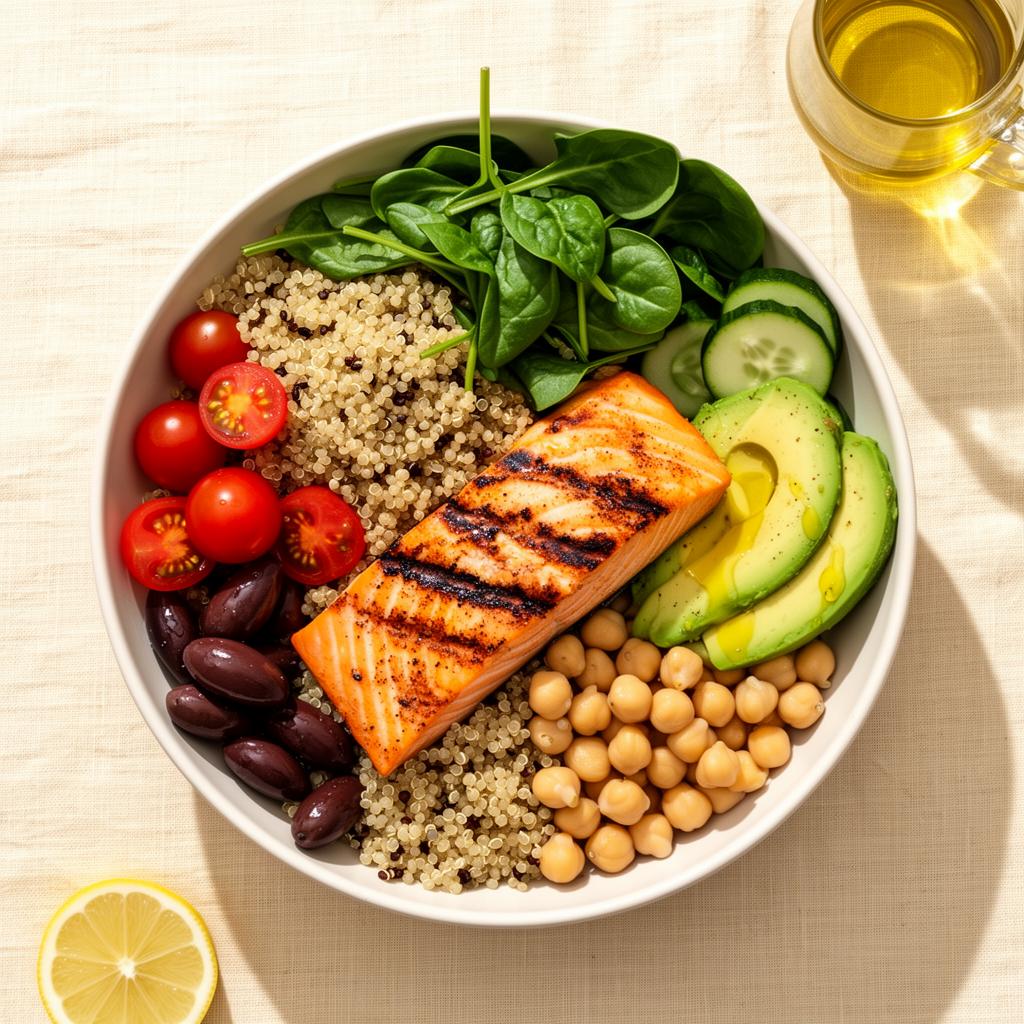
What works, then? Plans built for female biology. That means cycle-aware nutrition, protein leveraged to protect muscle, strength training calibrated to phase, micronutrient repletion (iron, magnesium, B-vitamins, omega-3s), realistic deficits that don't shut down ovulation, and stress and sleep treated as part of the protocol — not afterthoughts.
The frustration so many women feel isn't a character flaw. It's the rational response to following a map drawn for someone else's body. Hand them the right map, and the body responds.